







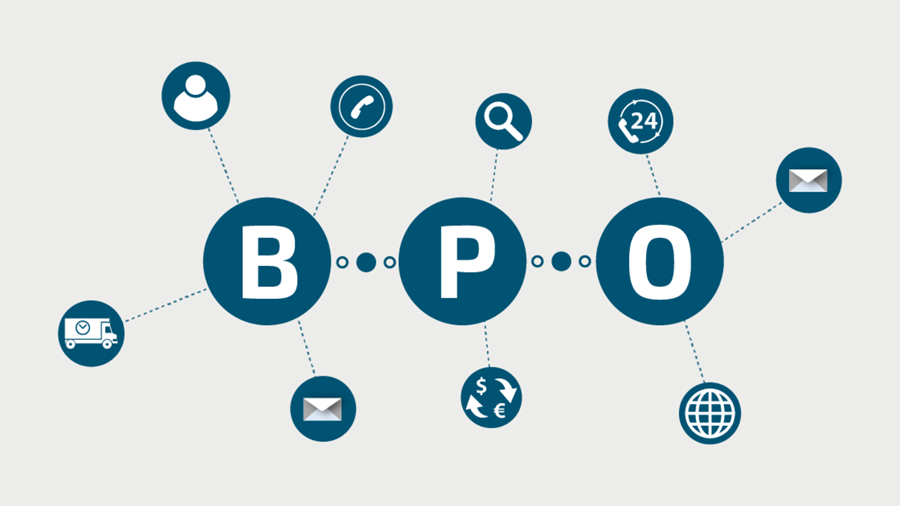
Business process outsourcing has grown over time to become one of the most deployed operational models in contemporary business. However, even with this popularity, a lot of companies still view BPO with incomplete knowledge of how it really works. Major decisions are often cost-driven rather than by a clear vision of processes, responsibilities, and implications over the long term.
The article breaks down business process outsourcing to the fundamentals. It spells out what BPO means in practical terms, how the BPO industry works in practice today, and how companies can implement outsourcing in a way that improves control, efficiency, and scalability rather than creating dependency or risk.
What is Business Process Outsourcing?
Before delving into the definitions, it’s important to understand why companies would opt for business process outsourcing in the first place. As organizations grow, operational processes multiply, regulatory demands increase, and internal teams spend more and more time maintaining systems than improving them. BPO addresses this pressure through the redesign of how work is executed, not by adding more internal layers.
Business Process Outsourcing Explained Simply
In simple terms, business process outsourcing involves delegating particular business processes to another company, which has expertise in carrying out these business processes for their customers.
These are not some random activities. These are some scheduled and repeatable functions that tend to assist in day-to-day business operations. These may include, but not be limited to, Financial and Accounting, customer service, HR administration, and tax filing.
The essence of the matter is ownership. In a BPO context, for example, ownership of delivery is with the outsourcing company, but ownership of results, best practices, and direction remains with the business. Here lies the difference between outsourcing and subcontracting.
What BPO Is Not
BPO is often misunderstood with staff leasing or ad-hoc type of outsourcing. BPO itself doesn’t mean contracting other companies’ employees to “help out.” BPO doesn’t mean a lack of insight either.
In an effective BPO arrangement, there is documentation, measurement, control, and improvement of the process. The service provider is working within a set framework with agreed tools and control and reporting structures and methodologies.
How the BPO Industry Works
Knowing how the BPO industry works is key to understanding why some organizations are successful at outsourcing and others are not. BPO is not just a string of ad-hoc groups working together; BPO is a delivery methodology that is based on repeatability, governance, and scale. The work organization approach directly correlates to repeatability and compliance.
Standardization With Controlled Flexibility
One of the fundamental elements of BPO in general is standardization. The BPO companies use standardized business processes to ensure that they can effectively cater to multiple companies because of standardization.
However, ineffective BPO vendors do not support flexibility to a controlled extent. The processes are modified to accommodate a client’s industry, regulatory setup, and in-house tools in a manner that does not impair the overall execution paradigm. It is exactly for achieving a balance between standardization and customization in processes that BPO operations are made to scale with precision.
Process-Centered, Not People-Centered
The BPO industry operates on processes rather than tasks. Companies develop processes that must be standardized in order to be executed for various customers concurrently while meeting different business needs.
Through the process-first approach, the costs of investing and the costs associated with compliance that may prove inefficient for a company would instead be borne by the BPO firm itself.
Global Deliveries With Local Compliances
A number of BPO companies have international operations, catering to clients in different nations. But for successful outsourcing, there is a need for knowledge about that region. It may include taxes, labor regulations, data protection policies, or reporting requirements. These are region-specific.
In order for a business process outsourcing company to be successful, it has to incorporate the management of business processes at a centralized level along with knowledge of local regulations. Such an aspect becomes crucial for companies operating in the UK or any other geographies.
How Business Process Outsourcing Works in Practice
Effective BPO starts with identifying which processes should be outsourced. Not every function is a good candidate. Processes best suited for outsourcing usually share these characteristics:
- They are operational rather than strategic
- They follow repeatable workflows
- They require specialized knowledge or compliance awareness
Back-office processes are often the first to be outsourced, followed later by selected front-office services where appropriate.
Defining Scope and Responsibilities
Once processes are selected, scope definition becomes critical. This includes:
- What the provider is responsible for
- What remains with internal teams
- How data flows between systems
- How exceptions and escalations are handled
Clear boundaries prevent confusion and ensure accountability on both sides.
Implementing Business Process Outsourcing Effectively
Implementing a successful BPO is rarely an issue of speed or how quickly costs can be cut. It entails preparation, clarity, and focus. The organizations that treat outsourcing as a process change and not a simple handover tend to have a greater potential for achieving operational stability.
Step 1: Process Mapping and Documentation
Prior to any transition, the detailed mapping of the process is required. The process mapping covers the inputs, outputs, dependents, time, and compliance points. Processes lackling documentation result in substandard outsourcing results. Successful BPO implementation entails preciseness rather than hastiness.
Step 2: Transition and Knowledge Transfer
The transition phase is a process during which knowledge transfer takes place from internal staff to the BPO service provider. This process also incorporates a series of steps known as ‘parallel runs’ during which both teams must work simultaneously to ensure accuracy and uninterrupted processes. This is also where rhythms of communication, reporting formats, and escalation processes are agreed on.
Step 3: Governance and Performance Management
Even after making these processes operational, n and control over business process outsourcing are not over.
These would encompass performance reviews, monitoring of KPIs, audits for ensuring compliance, and reviews for optimizing processes. Sound governance maintains control and enables the service provider to operate independently.
Front-Office and Back-Office BPO
BPO in business can apply to completely different areas within an organization, and the differences between back office, front office, or office operations BPO make an important difference. The different types possess different levels of risk that make them suitable to be undertaken at different stages of an outsourcing plan.
Back-Office Outsourcing
Back-office BPO entails support activities that are internal to a company and include accounting, payroll, human resources administration, taxes, and data. The activities are constantly performed in the background and thus not visible to clients. They are part of the operational foundation of an organization.
As these activities operate in a fixed manner and with a regulatory environment, outsourcing is highly viable. The third-party service vendors also ensure that these activities operate in a standardized manner with controlled processes and standard reporting. As a result, for the internal teams, these activities eliminate routine and with it come a fixed service delivery and hence realignment of these resources towards value-adding activities. Over a period of time, cost stabilization is also achieved by outsourcing back-office operations.
Front-Office Outsourcing
Front Office BPO includes those contact center operations that are oriented towards customers, like customer care, support, and sales operations. These tend to be nearer to the brand, hence require higher adherence to tone, communication, and service expectations.
Front office outsourcing, when done properly, increases responsiveness and availability without sacrificing brand identity. With scripts, training, and feedback in place, there is a high chance of brand representation by the outsourced employees. In most instances, organizations are able to provide extended hours of services, increased interaction handling, while maintaining a consistent customer experience even when growing.
Benefits of Business Process Outsourcing
The benefits of business process outsourcing extend beyond cost reduction. When implemented correctly, BPO reshapes how a company operates.
Key benefits include:
- Predictable operational costs and reduced overhead
- Access to specialized expertise and compliance knowledge
- Improved scalability without internal restructuring
- Greater internal focus on core business activities
These benefits are cumulative and become more pronounced over time as processes mature.
Business Process Outsourcing in the UK
Business process outsourcing UK companies adopt is often driven by regulatory complexity, labor costs, and the need for operational resilience. Payroll, tax reporting, and compliance functions in particular require constant attention to regulatory updates.
Outsourcing these processes allows UK businesses to maintain compliance without expanding internal administrative teams.
What to Look for in a BPO Company UK Businesses Rely On
A BPO company UK businesses trust must demonstrate:
- Familiarity with UK tax and employment regulations
- Strong data protection and security practices
- Clear reporting and auditability
- Ability to scale services as the business grows
Operational maturity matters more than pricing alone.
Managing Risk in Business Process Outsourcing
Risk management is a core part of BPO implementation. This includes data security, regulatory compliance, business continuity, and service reliability.
Effective outsourcing providers invest in secure systems, redundancy planning, and documented controls. Clients, in turn, retain oversight through governance structures and regular reviews.
How to Choose the Right BPO Solutions
The selection of BPO solutions must begin with an understanding of business priorities. An assessment of internal friction points in business processes and areas where specialization in other companies is most valuable must be made.
Assessment should emphasize process knowledge, communications capabilities, transparency, and long-term fit. A partnership approach, not a transactional one, delivers the most success during outsourcing. Viva Sync recommends adopting this approach in addressing BPO and incorporating such outsourcing in their operations.
Common Mistakes When Implementing BPO
Many BPO failures are not a result of bad service providers but do result from how outsourcing is brought in internally. Rushed implementation presents one of the most common causes for this. When companies skip detailed process documentation or compress transition timelines, providers must operate on assumptions instead of clarity. This often leads to inconsistencies surfacing months later, at which time correction would be more expensive and disruptive.
The other common travesty involves treating the outsourcing relationship as a handoff rather than as a managed operating model. Even with a truly capable provider in place, internal ownership of processes and outcomes, along with ownership of decisions, must be retained within the business. Without clear accountability, performance discussions are limited to being reactive rather than corrective, and small issues morph into structural problems.
Misaligned expectations round out the causes of friction. Outsourcing does not eliminate the need for communication, governance, and performance oversight. The companies that make BPO work invest time up front in defining responsibilities, escalation paths, and success metrics. Realistic planning, disciplined communication, and a realization that effective outsourcing is an ongoing management process-not once-and-done-exiting can help a company avoid these pitfalls.
Conclusion
Business Process Outsourcing (BPO) ceased to become an operational shortcut. Business Process Outsourcing became an operational model aimed at facilitating efficiency, effectiveness, and growth.
Having a clear understanding of BPO and its implementation process makes it easier to avoid many mistakes and use this process for better benefits. When complexity levels are rising, outsourcing is also set to play an increasing role in business process management.
Companies partnering with Viva Sync typically treat BPO as part of their operational architecture rather than a temporary fix, using it to build resilience, clarity, and sustainable performance.
FAQ: Business Process Outsourcing
❓ What is business process outsourcing used for?
Business process outsourcing applies to the contracting of predefined operational processes, including accounting and payroll, HR administration, and customer support, to specialist providers.
❓ What does BPO mean in business operations?
BPO refers to the delegation of responsibility for executing well-defined processes while retaining ownership of outcomes, standards, and strategic control.
❓ How long does it take to implement BPO?
The implementation timeline for each of these steps varies based on the complexity of the process, but most transitions take a few weeks up to a few months in covering documentation, transition, and stabilization.
❓ Is the BPO suitable for small companies?
Yes, it usually helps small companies outsource because they can access expertise and infrastructure without having to build large internal teams.
❓ How do I manage a BPO provider effectively?
In other words, effective management requires clear governance, defined KPIs, regular reporting, and continuous communication between internal teams and the provider.